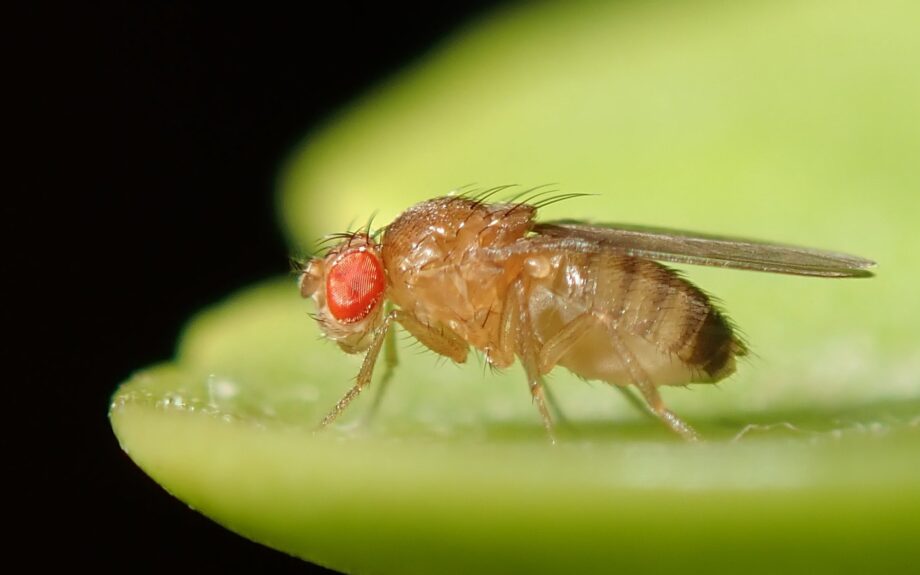
Get rid of fruit flies by removing their food and breeding sites, then trapping the adults with apple-cider vinegar, water, and a little dish soap. The trap attracts flies with the smell of fermentation, while the soap makes them sink; cleanup is what stops new flies from hatching.
Before you start
You need a small jar or cup, apple-cider vinegar, water, liquid dish soap, plastic wrap, and a toothpick. Use mild dish soap, not a concentrated detergent, and keep the trap away from children and pets. If flies cluster around fruit, garbage, or a drain, begin cleaning that area while the trap is working.
Make an apple-cider-vinegar trap
Mix about one-quarter cup of apple-cider vinegar with one-quarter cup of water and two or three drops of dish soap in a small jar. Exact proportions can vary with the container, but you want a shallow pool with a strong vinegar smell and enough soap to break the liquid’s surface tension.
- Mix the solution. Stir the vinegar, water, and soap briefly. Do not add so much soap that the trap becomes a thick layer of foam.
- Cover the jar. Stretch plastic wrap over the opening and secure it tightly around the rim.
- Make small entry holes. Poke several pinhead-sized holes with the toothpick. They must be large enough for a fruit fly to enter but not so large that it can easily fly back out.
- Place the trap. Put it near the affected area but not beside food, dishes, or a sink used for food preparation. In a large kitchen, use two traps in separate locations.
- Check and refresh it. Leave the trap for several days and check it daily. Replace the liquid every one or two days, and wash the jar before refilling it.
- Keep cleaning the source. The vinegar odor draws adults to the jar; when they land, the soap reduces surface tension and they cannot stay on top, so they sink. The trap catches adults but cannot reach eggs or larvae hidden in drains and decaying material.
Alternative traps
Use one of these if you prefer a different attractant or want a second trap in another part of the kitchen.
Wine trap
- Pour a small amount of red or white wine into a jar and add one drop of dish soap. Red wine often has a stronger aroma, but either can work.
- Cover the jar with plastic wrap and poke a few small holes in it. The fermented smell draws flies, while the soap helps them drown.
- Keep it away from food preparation. When it becomes dirty or stale, seal it and put it in the trash rather than leaving it by the sink.
Paper-funnel trap
- Cut clean paper or cardstock into a cone, with the narrow point at the bottom, and place the wide end over a jar.
- Add the same vinegar-water-and-soap mixture to the jar, leaving the funnel tip close to the liquid.
- Secure the funnel around the rim. Flies following the odor down the cone can slip into the jar, and the soapy liquid keeps them from escaping.
- Replace the paper and liquid every one or two days, or sooner if the trap becomes dirty.
Find and remove the source
Fruit flies lay eggs in fermenting material, so one overlooked banana peel or dirty drain can keep producing adults after the visible flies are gone. Check every day for several days, not just the fruit bowl.
- Remove overripe food. Check countertop bowls, the refrigerator’s fruit drawer, and bags of produce. Throw away soft, split, moldy, or overripe fruit and vegetables in a sealed bag. Do not keep scraps in an indoor compost pile.
- Clean sinks and drains. Lift out sink stoppers, remove food debris with a drain brush or toothbrush, scrub overflow holes, and flush with hot tap water. If you have a garbage disposal, switch it off before cleaning and never put a hand inside it.
- Empty trash and recycling. Take out indoor bins regularly, rinse residue from containers, scrub the bins, and close lids. Keep outdoor garbage enclosed and move compost away from doors and windows.
- Replace damp sponges and rags. Fruit flies can breed in fibers that stay wet and collect food particles. Wash sponges and dishcloths as their care labels allow, dry them completely, and replace anything that stays soggy or smells stale.
- Look in less obvious places. Check pet bowls, neglected coffee grounds, reusable bottles, mop buckets, and crumbs beneath appliances. Remove the material, clean the container, and let damp areas dry fully.
Clean the affected area
After removing breeding material, wash counters, the sink, cabinet fronts near the sink, the refrigerator’s fruit drawer, and trash and recycling containers with warm water and dish soap. Wipe sticky sugar residue with a solution of equal parts white vinegar and water, but test it first on marble or natural stone. Never mix bleach with vinegar, ammonia, or other cleaners. Dry surfaces, move small appliances so you can clean beneath them, and discard food that has touched contaminated standing water or moldy scraps.
Prevent future infestations
- Control produce. Buy what you can eat promptly, inspect bags before putting them away, and refrigerate ripe fruit rather than leaving it in an open bowl.
- Empty waste often. Take trash, recycling, and indoor food-scrap containers out before odors build, and keep outdoor containers tightly closed.
- Keep drains covered. Use drain covers, wash dishes promptly, and avoid leaving food or dirty dishwater in the sink overnight.
- Dry out damp places. Replace sponges often, hang cloths to dry, empty mop buckets and pet bowls, and fix leaks under sinks.
- Keep flies out and food protected. Check that door screens fit tightly, close exterior doors, and inspect produce when you bring it home. Refrigerate it promptly rather than leaving it near damp food.
Tips and common mistakes
- A trap is not a substitute for cleanup. If fruit, standing water, or dirty organic matter remains, new adults will keep appearing.
- Use fresh solution. A trap that has dried out, foamed over, or collected debris will attract far fewer flies.
- Do not skip the soap. A few drops are enough; heavily scented detergent may repel flies rather than draw them in.
- Keep the jar out of reach. Fruit flies are not the only insects attracted to fermentation, and the liquid should not touch dishes or food.
- Do not use bug bombs or insecticides near food. Traps and sanitation are safer and more effective for this indoor problem.
- Monitor for one or two weeks. Eggs may have been laid before you started, so keep checking for a while after the last fly disappears.
Key takeaways
- Remove overripe food and damp, dirty breeding material first.
- Apple-cider vinegar attracts; dish soap makes landing flies sink.
- Use several small holes and fresh solution in a covered jar.
- Clean drains, bins, sponges, counters, and hidden crumbs thoroughly.
- Keep produce cool, waste contained, and damp materials dry.
Frequently asked questions
How long does it take to get rid of fruit flies?
You should see fewer flies within a few days of removing the food sources. Complete control commonly takes one to two weeks because hidden eggs and larvae can produce a final wave of adults; keep the trap and cleaning routine going until that wave stops.
Why is my fruit-fly trap not working?
It may contain old liquid, have holes that are too small, or be too far from the breeding site. Make fresh solution, check the hole size, move the jar closer without placing it beside food, and use a second trap if the kitchen is large. If flies keep appearing, search again for hidden produce, drain debris, or soggy sponges.
Can fruit flies really breed in drains?
Yes. Small flies can develop in the organic film and food particles that collect in sink drains and garbage disposals, although other tiny drain flies can look similar. Clean the stopper, overflow, and disposal area, use a drain cover, and avoid leaving dirty dishes in the sink. Persistent flies may have another source nearby.
Are fruit flies dangerous to people?
Fruit flies do not bite or sting, and they are generally a nuisance rather than a serious health risk. They can carry germs on their bodies, though, so discard food they have contacted and fix the sanitation problem that attracted them.